Xi-Trump state visit – all spectacle, no substance
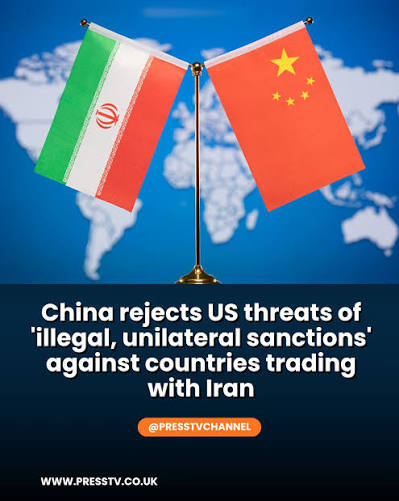
Photo websource: https://www.instagram.com/p/DceC7g4CNph/
The long publicized visit of China’s President Xi Jinping with U.S. President Donald Trump at the White House offered little of substance. There were no new trade deals announced and no diplomatic breakthroughs from this supposedly historic state visit.
Xi’s presence here did manage, in the U.S. corporate media coverage, to blot out the U.S. fiasco at the United Nations General Assembly meeting. The delusional harangue by President Trump the day before was met with stony silence and many walkouts. The media globally reported on the awkward silences as Trump paused multiple times expecting applause, yet receiving none, as he boasted about his supposedly stunning leadership, ominously made threats against Cuba and then threatened Iran with annihilation.
Trump was anxious to project himself as a world leader and a great historic figure, but in the meeting with President Xi it was clear he had little to offer besides some ceremonial pomp. Lavish welcoming ceremonies, a state dinner and a departing tea could hardly paper over the deep-seated structural differences. It was a meeting to buy time and avoid conflict.
It was President Xi’s first visit to the U.S. since 2015. However, this visit did not include any top Chinese tech or business leaders, because nothing of substance was on the table. This is the third meeting of Presidents Xi and Trump since October 2025. They are scheduled to meet twice more this year. The meetings will be in November in China, during the Asia-Pacific Economic Cooperation (APEC) leaders’ meeting, and in December in Florida (at the Trump National Doral Miami), during the Group of 20 (G20) summit.
At each meeting it will be clear that U.S. threats, rounds of tariffs up to 100%, sanctions, secondary sanctions and military encirclement are a failed strategy that China is matching head on.
Global South meetings break through U.S. sanctions
President Xi arrived after China’s pivotal role in several major political and trade gatherings — involving half the population of the world — defined new possibilities. The Shanghai Cooperation Organisation (SCO) held in the Kyrgyz capital Bishkek Aug. 31 to Sept. 1, the 11th Belt and Road Summit in Hong Kong, China, Sept. 9-10, and the 18th Summit of BRICS in New Delhi Sept. 12-13 included numerous countries under U.S. sanctions.
The willingness to involve and extensively trade with sanctioned countries challenges the U.S., whose secondary sanctions seemed to have little impact. These three Global South exchanges have denounced all forms of U.S. sanctions. Plans to develop trade and industrial and infrastructure development outside the U.S. dollar using various forms of other currencies and mutual barter agreements confirmed the growing isolation of the U.S. and the decline of the “almighty dollar.”
Any hope that China would be convinced to end its extensive trade or support with sanctioned Iran or Russia or any of the more that 40 countries sanctioned by the U.S. was dashed by these major gatherings in the weeks before Xi arrived in Washington.
U.S. withdraws from international forums, aid and cooperation
In January 2026, the U.S. government announced its withdrawal from and defunding of 66 international organizations and multilateral forums — 31 U.N. entities and 35 non-U.N. bodies. Many focus on climate, labour, migration and other issues the Trump administration has categorised as catering to diversity and “contrary to the interests of the United States.” (Al Jazeera, Jan. 8)
Withdrawals from the U.N. Human Rights Council (UNHRC), U.N. Relief and Works Agency (UNRWA) that delivers services and aid in Gaza and the West Bank, World Health Organization (WHO) and the Paris Climate Agreement were seen as efforts to tear apart any effort at global cooperation.
Overshadowing the Xi-Trump meeting was the reality of the weakened U.S. military position — with its military bases in West Asia in ruins and its super missiles and jets in broken pieces, the targets of thousands of rounds of Iran’s well hidden, asymmetric missiles and drones.
Issues such as Taiwan, AI technology, the climate crisis, the U.S.-Israeli war on Iran and the U.S.-Israeli widening destruction of Palestine were not touched.
U.S. government-imposed tariffs on Chinese goods are sharply restricting China’s access to many forms of advanced technology. Trump also blocked China’s inexpensive electric vehicles (EVs) from entry into the U.S. Low-cost Chinese computers, phones, laptops and electronic equipment made by Huawei and other Chinese companies are banned by the U.S. But all of this technology is now among top sellers around the world. Chinese brands account for roughly 80% of EV sales in Latin America and hold a double-digit market share across parts of Europe and Asia.
China responded to U.S. economic warfare with its own trade restrictions of rare earth metals and magnets that are essential in U.S. manufactured items. Most important and to the enormous frustration of U.S. corporate billionaires is that China has quickly developed its own technology and is now a formidable competitor on the world market.
China signaled its low expectations of the recent visit by not including a delegation of any prominent Chinese chief executives, or top business, economic or tech leaders. Present on the U.S. side were 21 billionaires who represent the real power in capitalist society. Forbes estimated the combined net worth of the capitalist technology moguls present at the event to be over $2.4 trillion. (Sept. 24)
Trump announced, after three days of events starring himself, the great success of his hosted state visit. China agreed to buy more U.S.soybeans and other agricultural products worth $17 billion. All other purchases and trade deals were postponed until a later time. There was a vague agreement to extend the existing trade truce by two months, pushing its expiration date from Nov. 10 to Jan. 10, and to schedule future trade talks.
Pax Silica and Iran sanctions
Various U.S. administrations have made grand pronouncements of their determination to control global processes far into the future. The U.S.-dominated international economic and security initiative Pax Silica, launched in December 2025 to secure global supply chains for artificial intelligence (AI), semiconductors, and critical minerals, is one topic to be discussed at future global meetings. It’s on the agenda for the APEC and G20 meeting that both President Xi and Trump will attend, but it was not discussed during the state visit, because the initiative is aimed directly at China.
Pax Silica as a grand scheme appears to be failing, a lot like last month’s “Operation Economic Outcast” and “Operation Economic D Day” imposing sanctions against Iran and against every nation that dares to trade with Iran. Countries of the Global South continue trading with Iran, just not in U.S. dollars.
Washington’s proclamations are threatening. But backing up these grand campaigns is no longer a process that U.S. privately-owned corporate power can enforce.
Many countries under U.S. control, such as the Philippines, will be forced to sign onto and pay for desperate schemes to outflank China. But the hard facts are that China produces roughly 94% of the advanced permanent magnets used in all electronics, electric vehicles and military equipment, and China controls roughly 90% of the capacity to turn raw ore into usable metals. For decades, Beijing heavily invested in every step of the refining and production process. China has the scientists, technicians and equipment that socialist planning provides.
China operates more than 40 dedicated rare earth laboratories and at least 11 universities and technical colleges offer specialized engineering and chemistry degrees focused entirely on rare earths.
The U.S., because billionaires want immediate profits and dividends, has no plans to invest in educating millions of youth, here or in any other country.
Economic power can’t just be declared. It needs to be backed up with decades of planning, educating and funding.