End Pennsylvania’s mandatory life sentences now
Philadelphia
In March 2026, in the case of Derek Lee, the Pennsylvania Supreme Court issued a landmark decision: mandatory life without parole (LWOP) sentences for second degree murder are unconstitutional. Second degree murder in Pennsylvania does not require a person to be involved in the death of another or have any specific intent to harm, let alone kill, another person. Instead, to be guilty of second degree murder they need only be found to have participated in a felony and that another person died in the course of that felony.
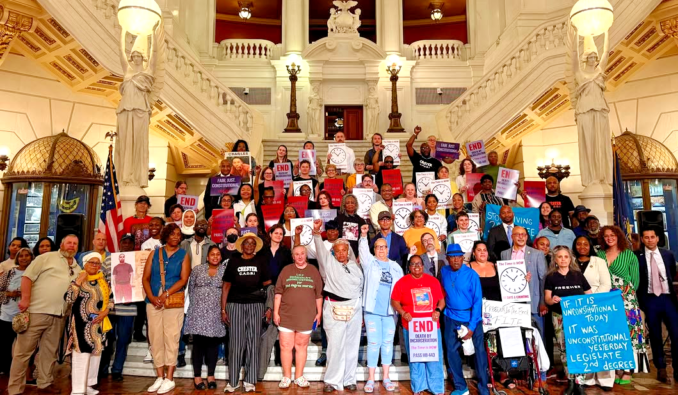
Demonstration demanding retroactive relief from LWOP sentences in Harrisburg, Pennsylvania in September 2026./Photo courtesy of the Abolitionist Law Center
For example, people in the state serving LWOP may have driven a friend to a store, not knowing they intended a robbery that went bad. The person stayed in the car the whole time, but under second-degree sentences, the defendant’s degree of responsibility for the death is irrelevant. This is why the court decided that the law is draconian and unconstitutional.
However, the court did not offer a remedy, nor did it address retroactivity for those already serving life without parole. Instead, the court gave the Pennsylvania House and Senate 120 days to write legislation that would end Life Without Parole (LWOP) for second-degree convictions. But the deadline passed on July 24 without any legislation approved. Legislators will not be back in session until mid-to-late September.
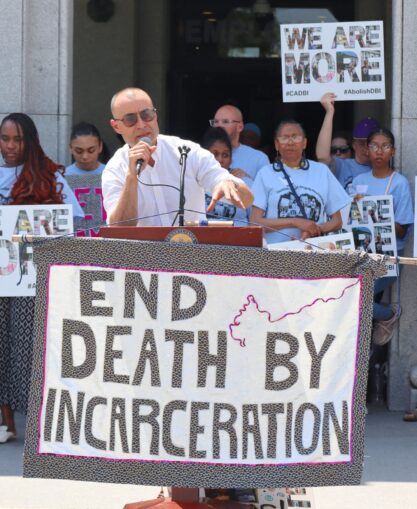
Robert Saleem Holbrook with the Abolitionist Law Center speaks at a rally in Harrisburg during Second Chances month, April 2024. /Photo courtesy of the Abolitionist Law Center
Many of those affected by the decision may not live long enough to benefit from the ruling. Of the 1,200 Pennsylvanians sentenced to LWOP for second-degree murder, the majority are Black men over the age of 50 with decades of incarceration.
A coalition of attorneys is asking the Pennsylvania Supreme Court to end the limbo this population is in and apply their ruling retroactively. To get these urgent cases before the court, on Sept. 12 they submitted a rare King’s Bench petition on behalf of each of four elders, two men and two women. A King’s Bench petition can bypass lower courts and go directly before the Pennsylvania Supreme Court. It gives the court the ability to act in urgent matters of public importance.
The attorneys hope the court will agree to take the case within a few months and decide the case within the year. As one attorney stated, “This is an urgent situation in which over 1,000 people are serving an unconstitutional sentence.” Retroactive application of the Lee decision would be a step toward justice.